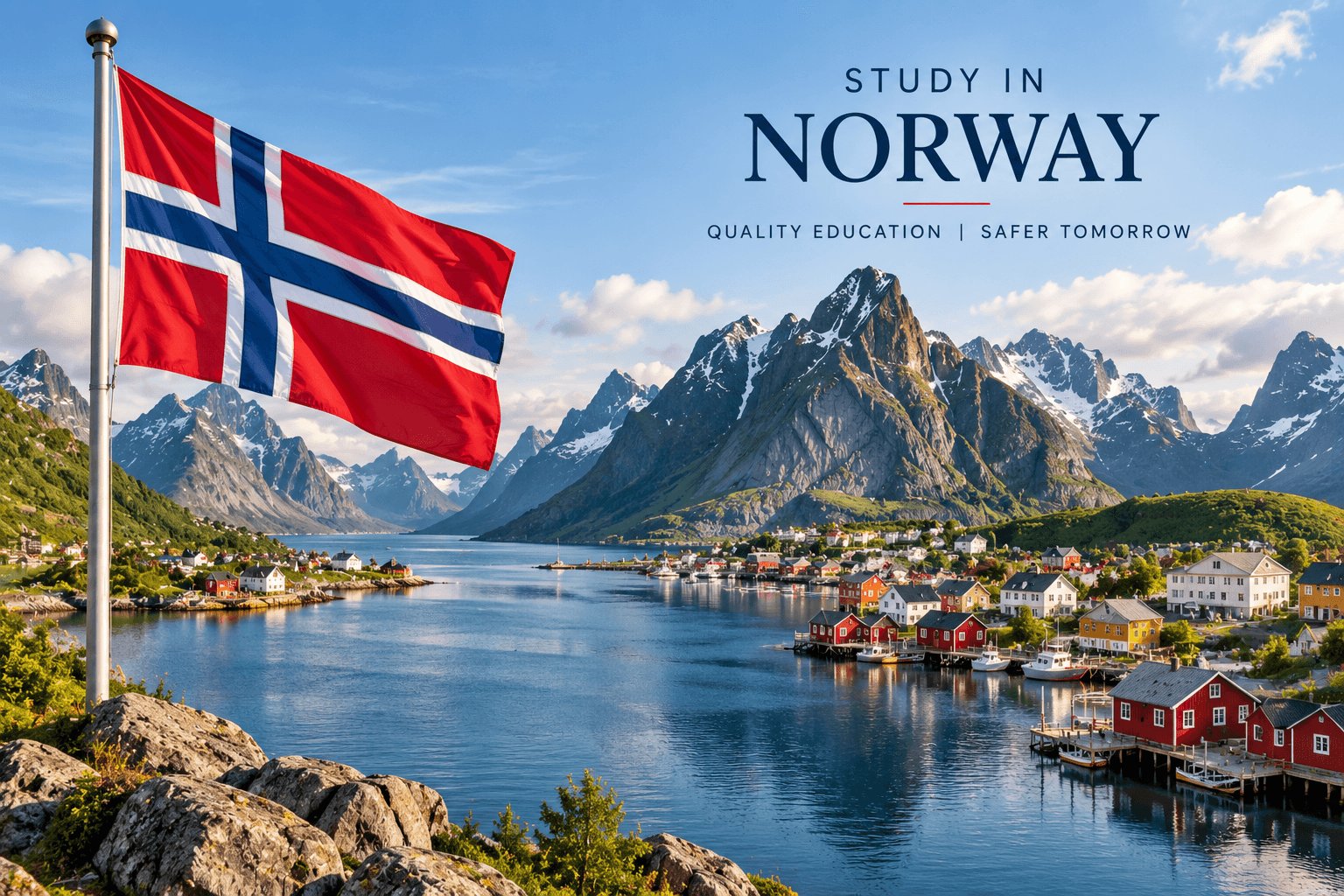
Your Guide to Studying in Norway: Admissions, Scholarships & Visa 2027
Norway is a choice for international students who want good education, a safe environment, and opportunities to grow academically and professionally. Pakistani students can explore bachelor’s, master’s, and PhD programs at universities based on their academic qualifications, preferred subject, and program requirements.Norway’s university system offers study options, including master’s programs taught in English and research opportunities. Pakistani students should carefully consider tuition fees, living expenses, admission requirements, and study permit rules before submitting an application.Why Study in Norway?
Studying in Norway gives students the opportunity to learn in an international environment, access modern educational facilities, and focus on research. Norway is known for its natural environment, quality education, and focus on innovation.Pakistani students can find courses in engineering, business, IT, environmental science, social science, and many other subjects. Available programs depend on the university and the academic intake.Admission Requirements for Pakistani Students
Admission requirements in Norway vary by university and study level. Pakistani students who want to pursue a bachelor’s degree generally need to meet the relevant upper-secondary education and university admission requirements. Students applying for a master’s degree usually need a bachelor’s degree that matches the subject, along with any additional requirements set by the university.Pakistani students should prepare their educational certificates, academic transcripts, proof of English language proficiency if required, and any other documents requested by the university. Meeting the minimum marks or eligibility requirements does not guarantee admission.Tuition Fees and Cost of Living
Tuition fees in Norway vary depending on the university, program, and other applicable conditions. Pakistani students who are not from the EU/EEA or Switzerland may be required to pay tuition fees, unless a relevant exemption applies.Living costs in Norway can be high compared to many other study destinations. Pakistani students should budget for accommodation, meals, transportation, health-related expenses, and other personal costs. The financial amount required for a study permit should be checked according to the latest rules of the Norwegian Directorate of Immigration (UDI).Student Visa and Work Opportunities
Pakistani students who plan to study in Norway for more than three months generally need a study permit. Applicants must meet the relevant requirements, including admission to an approved educational institution, financial support, accommodation where required, and compliance with immigration regulations.Students holding a Norwegian study permit may be allowed to work part-time during their studies and full-time during holidays, subject to the conditions and work limits stated in their permit. Students should confirm the latest rules with UDI before making employment plans.Intakes and Application Process
Norwegian universities set their own application deadlines and admission schedules. Pakistani students should begin preparing early because deadlines, required documents, and available courses vary by university and program.The application process normally includes selecting a suitable course, checking eligibility, preparing academic and English language documents, submitting the application, and applying for a study permit after receiving the required admission documents.Conclusion
Norway offers international students opportunities to study in a diverse academic environment. Pakistani students should carefully review their eligibility, available courses, tuition fees, living expenses, and study permit requirements before submitting an application.For accurate and updated information, students should check the official website of their chosen university and the Norwegian Directorate of Immigration (UDI).